Precision Microfluidic Plastic Components
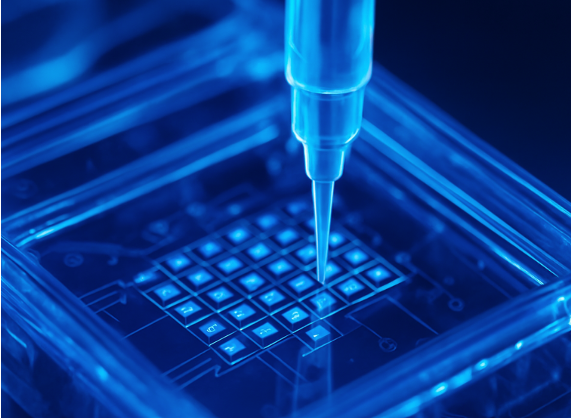
Precision Microfluidic Plastic Components
Core Technical Capability: Medical-Grade Microfluidics and High-Precision Injection Molding
In medical and electronics industries where extreme precision is essential, product performance often depends on micron-scale details. We provide one-stop CDMO solutions from design and development through mass production, built around three core areas of expertise:
1. Medical-Grade Microfluidics and Micro-Injection Molding
For biomedical testing and microfluidic lab-on-a-chip applications, we have the technical capability to handle highly challenging geometries.
Ultra-Thin Walls and High Aspect Ratios: Stable production of wall thicknesses as low as 0.05 mm and micron-scale microchannel structures.
Surface Roughness Control: Optical-grade mold polishing achieves product surfaces down to Ra 100 nm, ensuring that fluid behavior within microchannels meets the requirements of biological experiments.
**Biocompatible Materials: **Expertise in the processing characteristics of bioresorbable materials such as PLA and PLLA, as well as medical-grade polymers, supports production in sterile, low-residue environments.
2. Micropipettes and High-Precision Tubular Components
Micropipettes and sampling components require exceptional dimensional stability and chemical inertness.
Precision Dimensional Tolerances: Servo-control systems closely monitor shot volume and pressure to ensure consistent pipette tips and tube diameters.
High-Quality Surface Finishing: Precision matte or gloss polishing helps prevent liquid retention on surfaces and ensures accurate specimen transfer.
3. High-Frequency, High-Speed Electronic Connectors
Connectors for precision electronics and medical devices continue to become smaller and more densely packed.
High-Precision Mold Structures: Supports multi-pin, fine-pitch molding requirements while ensuring high structural strength and electrical insulation.
Engineering Plastics: Expertise in processing heat-resistant engineering plastics such as LCP and PPS for the high temperatures of SMT reflow processes.
Integrated Insert Molding: High-precision molding of metal and plastic components improves connector durability and electrical stability.
Precision Microfluidic Plastic Components
•Core Technology: Development of Advanced Cyclic Olefin Polymer (COC/COP) Microfluidic Chips
In microfluidic systems, substrate selection directly determines the accuracy of bioanalysis. We specialize in combining the excellent physicochemical properties of COC (Cyclic Olefin Copolymer) and COP (Cyclic Olefin Polymer) with high-precision injection molding to create medical-grade chip solutions for our customers.
Why Choose COC / COP? (Material Advantages)
•Ultra-Low Autofluorescence: Provides glass-like optical transparency and significantly reduces background noise in fluorescence detection, improving the signal-to-noise ratio.
•High Chemical Resistance and Biocompatibility: Offers good resistance to acids, alkalis, and many polar solvents. Its hydrophobic surface and extremely low protein adsorption help preserve specimen integrity within microchannels.
•Extremely Low Water Absorption: Far lower than PMMA or PC, maintaining excellent microchannel dimensional stability in humid environments and during long-term storage.