Intraocular Lens (IOL) Injector
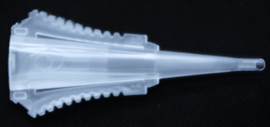
Intraocular Lens (IOL) Injector
1. Injection-Molding Characteristics of Plastic IOL Injectors
•Precision Micromolding:Injector components such as plungers and cartridges are typically very small and require exceptionally precise injection molding to maintain micron-level dimensional tolerances.
•Medical-Grade Materials:Common materials include polypropylene (PP), polycarbonate (PC), polysulfone (PSU), and polyether ether ketone (PEEK).
•Production Environment:Production and packaging must be performed in an ISO 13485-compliant cleanroom environment to ensure sterility.
•Mold Precision:High-precision molds must prevent flash and dimensional deviations, ensuring smooth delivery and an effective seal during implantation.
2. Key Technologies and Challenges
•Small-Incision Technology:Modern IOL cartridges can pass through incisions of 2.2 mm or smaller, substantially reducing the surgical wound.
•Lubrication and Lubricant Application:Because IOLs are generally made from soft materials, the injector interior often requires a special lubricating treatment or lipid-based lubricant to reduce friction and prevent traction on ocular tissue.
•Wall-Thickness and Lubricity Control:The injection-molding process must produce a thin, lubricious injector tip while maintaining the structural strength of the plastic.